
Selecting food ingredients for commercial food production includes more than obtaining a suitable color. In addition, manufacturers must take into account consistency, application specifications, production quantities and the behavior of an ingredient in a finished product. By purchasing natural food coloring wholesale, businesses can better coordinate the use of ingredients in their operations and test the naturally derived food coloring possibilities for drinks, sweets, dairy, bakery, and other food products.
Begin With the Intended Food Application
The final product should inform the color choice. Each of a beverage, frozen dessert, candy, sauce, or baked product can have different formulation requirements. The shade that is suitable for one food regime can be different for another.
Manufacturers have the ability to select a desired shade and have some parameters in mind before buying the product in greater quantity, such as pH, processing method, temperature exposure, storage conditions, and shelf life. The information is helpful when talking to a supplier about appropriate color ingredients.
Understand Available Natural Color Sources
Food colors derived from nature may be from various natural sources. Various colors can be used in commercial products such as beetroot, turmeric, annatto, black carrot, spirulina, etc.
The source chosen should be compatible with the visual effect desired and the food matrix requirements. Some of the ingredients have beneficial effects on shades of yellow or orange, and some have beneficial effects on shades of red, purple, blue and green. When developing a specific look, product developers have more flexibility to explore the various sources.
Knowing if a color is powder or liquid is helpful, too. The preferred format might be related to the production process, equipment and method used to incorporate the ingredient into the product.
Evaluate the Color Before Ordering in Bulk
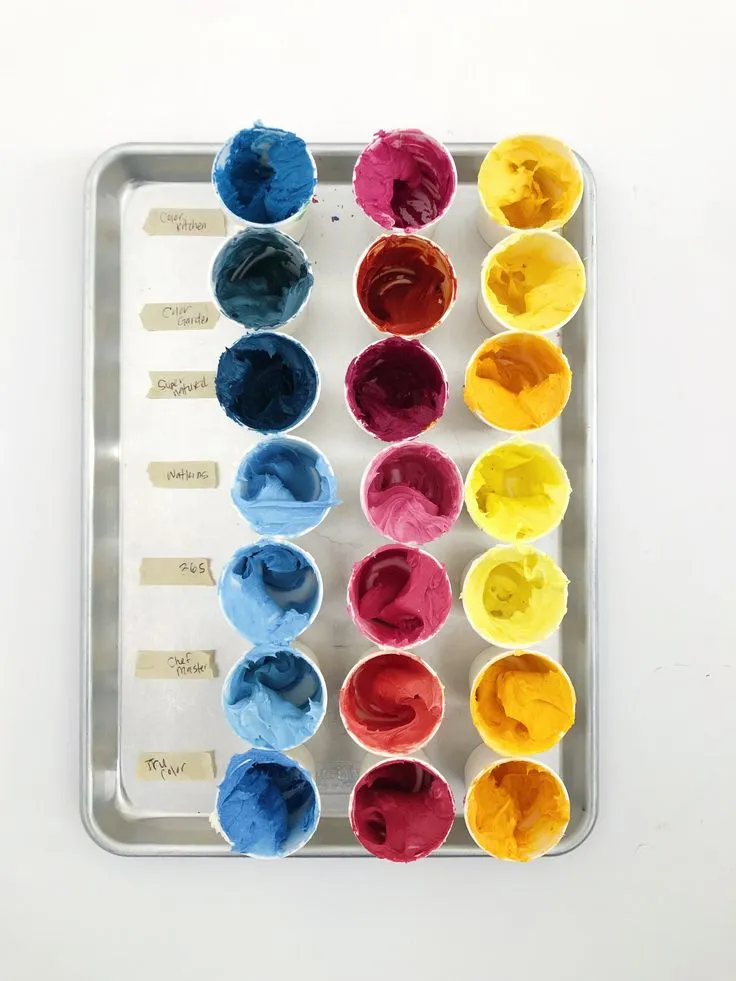
Wholesale purchasing is best performed when the color is evaluated in the actual formulation. A sample can give the development team an idea of how the ingredient will process and the appearance of the final product upon preparation.
Testing can also help to determine dispersion, shade intensity, dosage and compatibility with other ingredients. Application testing may be especially helpful when products are subject to heat, acidity, light and freezing.
This step enables manufacturers to make decisions based on realism of product performance and not just appearance. After successful evaluation of the formulation, it is easier to plan larger volume purchasing.
Consider Your Production Volume
The specific requirements for commercial purchases will differ from business to business. The amount required could be small for a small product line, or larger for regular deliveries to a large manufacturer for ongoing production.
When choosing from the various Natural Food Color Supplier alternatives, buyers may ask about the quantity they have and their plans for growth, the types of packaging they require, and how often they will need to order. This information can be useful to share with the supplier to suggest an advantageous purchasing arrangement.
When a product that is naturally colored has transitioned from development to regular production, planning is beneficial. For expansion, ingredient requirements may increase, and knowing the options for supplies at an early stage can help with smooth expansion.
Review Quality and Documentation
Commercial food production is reliant on the quality of the ingredients. Customers should check the product specifications and documentation for other products to be ordered before ordering a bigger quantity. Details of the source of ingredients, format, application and recommended use can assist in decision-making for development and procurement teams.
Manufacturers may also request samples and technical assistance. A supplier who offers helpful application info can make it easier to grasp the potential application of a specific color in the intended product.
Good documentation is also worthwhile for in-house product development. It provides teams with a shared resource to help them talk about the ingredients they should use, the formulation needs, and the production process.
Plan for Consistent Commercial Production
If a correct color is chosen, manufacturers can then establish a clear buying plan based on their expected production plan. Having a consistent source can assist businesses in keeping the same look on the products for future production requirements and product batches.
In advance, it is useful to discuss lead times, quantities available, packaging and order schedules. This helps procurement teams to understand the ingredient’s ability to fit into their production planning.
An effective wholesale approach can also aid product expansion. If a color is used successfully in one product, manufacturers can look at other uses of the color, and perhaps other shades of the same color for other products.
Make Wholesale Purchasing Part of Product Planning
It is best to source natural color in conjunction with the purchasing, product development and technical teams. The required shade and formulation properties can be specified by the development team, and volume, packaging and supply planning by the procurement team.
This synchronized effort enables businesses to make the right ingredient choices in terms of short- and long-term production requirements. It is also more structured to go from product testing to commercial manufacturing.
Conclusion
When ingredient selection, application testing, quality information and supply planning are taken into account, wholesale natural color buying can be a viable component of commercial food production. If you understand the product and the product-making process, it will be simpler to pick an appropriate color and buying technique. For your next naturally colored food or drink product, check in to foodrgb.com to learn about natural color options and move forward with your commercial food coloring goals.