




















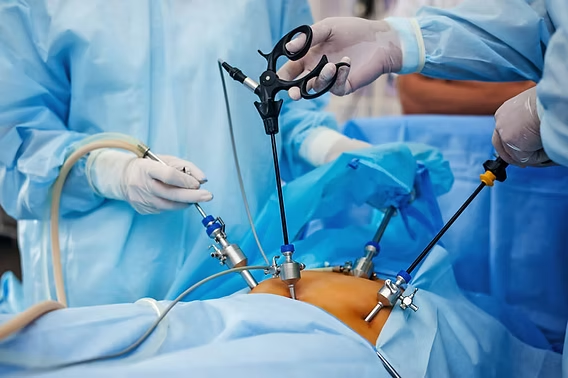
The field of medical education is undergoing rapid evolution. Beyond theory, students require more. They require experience. They get a better understanding of surgical instruments and methods via practical experience. Students may learn by doing with laparoscopic surgery training. This approach increases confidence, enhances accuracy, and gets aspiring surgeons ready for actual operating room scenarios.
Discuss five benefits of students learning through hands-on laparoscopic surgery training.
Laparoscopic Surgery Training Improves Practical Understanding
Students get a firm understanding of surgical techniques through practical laparoscopic surgery training. Surgery is not the same as reading about it. Students learn more quickly when they play instruments themselves. They are aware of how tools, ports, and cameras interact with each other. This hands-on experience facilitates understanding of complex operations.
Builds Confidence In Future Surgeons
With practice, confidence increases. Students have less anxiety when they do operations in training laboratories. They become accustomed to using surgical tools and supplies. Later on, this self-assurance aids them in actual procedures. In the operating room, they are better able to concentrate and make judgments more quickly.
Develops Better Hand-Eye Coordination
Strong hand-eye coordination is necessary for laparoscopic surgery. Instead of looking at the patient directly, surgeons work while staring at a screen. Students can practice these motions through hands-on instruction. They eventually master precise instrument control. For safe and successful surgery, this ability is crucial.
Helps Reduce Surgical Errors
Accuracy increases with practice. Regular training helps students make fewer mistakes in actual processes. They have a clearer understanding of the surgical procedures. Additionally, they learn how to deal with unforeseen circumstances. This lowers the possibility of surgical complications.
Improves Teamwork And Communication
Surgery is never a one-person operation. Physicians must collaborate closely with technologists, nurses, and assistants. Teams are frequently used for hands-on training. Students gain the ability to collaborate with others and speak coherently. In actual surgical settings, these collaborative abilities are crucial.
To Conclude
Practical training in laparoscopic surgery equips students for actual medical practice. It boosts confidence, enhances abilities, and fortifies collaboration. Above all, it assists aspiring surgeons in carrying out operations safely and efficiently, preparing them for real surgical challenges and improving overall patient outcomes.


